THE RECIPE JOURNAL · Main Course
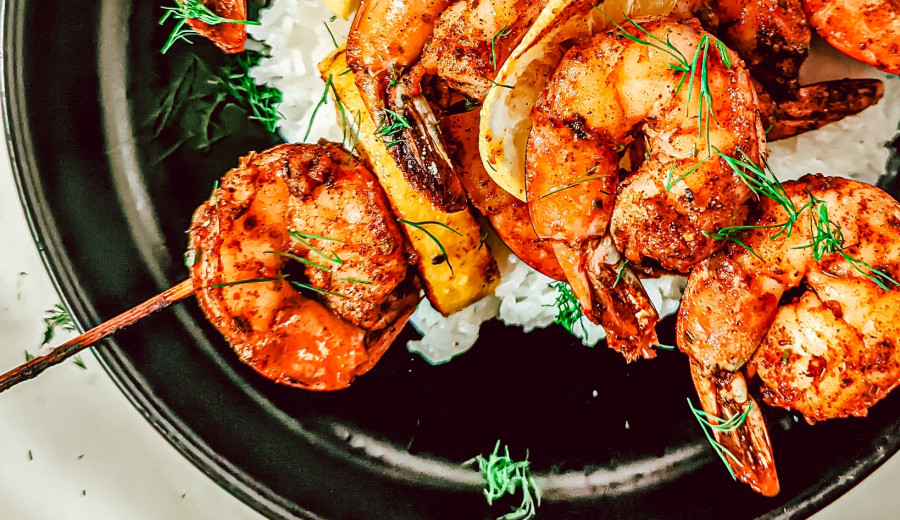
Foil-Baked Jamaican Jerk Shrimp
Get ready to enjoy a burst of bold, spicy flavors with this easy foil-baked shrimp recipe. Perfect for a quick weeknight dinner or a weekend cookout, it’s full of zesty jerk seasoning that will transport your taste buds straight to the Caribbean.
FROM THE KITCHEN • Foil-Baked Jamaican Jerk Shrimp
01 THE RECIPE
Let's make it.
Follow these steps for a delicious result. Tick off each step as you go.
FROM OUR VIDEO COLLECTION
Juicy Chicken Nuggets
Something delicious to watch next.
01
Step 1
Start by heating your grill to medium-high. While it warms up, toss together the soy sauce, vinegar, onion, olive oil, green onions, thyme, habanero peppers, sugar, nutmeg, allspice, and cloves in a food processor. Give it a quick blend—about 15 seconds—until everything’s combined into a flavorful jerk sauce.
02
Step 2
Next, shape a piece of foil into a little bowl and add the shrimp. Pour enough of the jerk sauce over them to coat well. Place the foil bowl on the grill, then seal it up but leave a small opening to let some steam escape. Let the shrimp cook for around 10 minutes, giving it a stir now and then until the shrimp turn pink and are cooked through.
03
Step 3
Carefully transfer the shrimp to a bowl. Pour the remaining sauce into a small saucepan and warm it over medium heat for a couple of minutes. Once heated, spoon the sauce over the shrimp and enjoy!
Why you’ll love it
This dish is full of bold, spicy flavors with a smoky touch from the foil baking method. It’s quick to prepare and perfect for a weeknight dinner or a casual gathering. Plus, shrimp cooks fast, making it an easy choice when you want something delicious without spending hours in the kitchen.
How to serve
Serve alongside steamed rice, coconut rice, or grilled vegetables to balance the spice. A simple side salad or coleslaw can add a refreshing crunch. For extra heat, offer sliced fresh chili or hot sauce on the side.
Storage & leftovers
Store any leftovers in an airtight container in the refrigerator for up to 2 days. Reheat gently in the oven or on the stovetop to avoid overcooking the shrimp. Avoid freezing, as shrimp can become rubbery after thawing.