

THE RECIPE JOURNAL · Side Dish
Korean Non-Spicy White Kimchi: Baek Kimchi
This refreshing Korean side dish offers a crisp, tangy flavor without the heat, making it perfect for those who prefer milder tastes. It's a great way to enjoy traditional kimchi with a gentle, comforting twist.
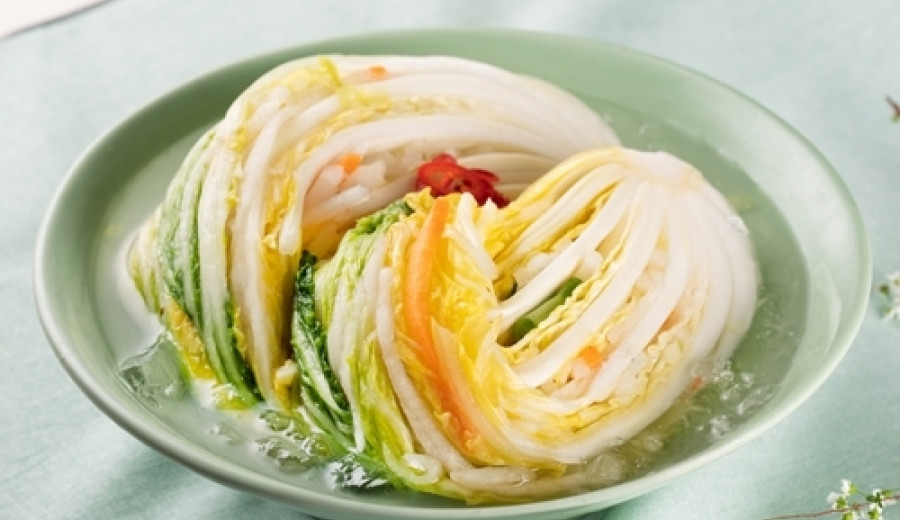
FROM THE KITCHEN • Korean Non-Spicy White Kimchi: Baek Kimchi
01 THE RECIPE
Let's make it.
Follow these steps for a delicious result. Tick off each step as you go.
FROM OUR VIDEO COLLECTION
Hearty Meatloaf Meal
Something delicious to watch next.
01
Step 1
Start by dissolving half a cup of coarse salt in a large bowl of water. Submerge the cabbage in the salty water and let it soak for anywhere between 12 to 24 hours. Once it’s done soaking, drain the cabbage, give it a good rinse, and squeeze out as much water as you can.
02
Step 2
While the cabbage soaks, soak the jujubes in a small bowl of water for about 10 to 15 minutes. After that, drain them, remove the pits, and slice them thinly.
03
Step 3
Next, toss water, salted shrimp, scallions, garlic, and ginger into a food processor and blend everything until it’s nice and smooth. Pour this mixture into a big bowl, then add the jujubes, radish, chestnuts, pear, carrots, both red and green chile peppers, brown sugar, and two teaspoons of salt. Stir in five more cups of water, then mix in the cabbage until everything is well coated.
04
Step 4
Pack the cabbage mixture tightly into an airtight jar, pouring in any leftover liquid from the bowl. Seal the jar and leave it out at room temperature for a day or two until it starts to ferment. Once you see some bubbles or that tangy smell, move it to the fridge to slow down the fermentation.
Why you’ll love it
This version of kimchi is a wonderful alternative for those who prefer a milder taste. It is refreshing, crunchy, and full of subtle flavors without the heat. The natural fermentation brings out a gentle tang that pairs well with many dishes.
How to serve
Enjoy this mild kimchi as a side dish with rice, grilled meats, or soups. It also works well in light salads or as a crunchy topping on noodles and sandwiches.
Storage & leftovers
Store in an airtight container in the refrigerator to slow down fermentation. It will develop more flavor over time but is best eaten within a few weeks for optimal freshness and crunch.